Hummocks: Marronage in a Carceral Florida by Sydney Maubert
Hummocks: Marronage in a Carceral Florida by Sydney Maubert first appeared in The Islandia Journal Issue 12, Invasive Miami.
“The spectacle of mass movement draws attention inevitably to the borders, the porous places, the vulnerable points where one’s concept of home is seen as being menaced by foreigners. Much of the alarm hovering at the borders, the gates, is stoked, it seems to me, by (1) both the threat and the promise of globalism and (2) an uneasy relationship with our own foreignness, our own rapidly disintegrating sense of belonging.” [1]
In 1858, US Congressman Joshua Giddings published one of the early indictments of slaveocracy through his account of the Seminole Wars. His condemnation of the United States government’s seizure of Black fugitives from the Seminoles, who had escaped slavery in neighboring slave states, establishes how the geography of the Everglades communicates terms of captivity and freedom. He critiques Andrew Jackson’s actions during the Seminole Wars, stating, “Perhaps no portion of our national history exhibits such disregard of international law, as this unprovoked invasion of Florida.”[2] In his book “Exiles of Florida”, he reveals the colonial anxieties that the US military had during the invasion of the Everglades. In 1837, during the Second Seminole War on the west side of Florida, the letters of General Zachary Taylor describe the swamp as “three-quarters of a mile in width”, “thickly covered in sawgrass, at least four feet in height”. Through it flows a “cloudy stream”, whose current is “hardly perceptible”, stretching “left in an endless savanna”, and to the “right it appears to deepen into an impassable morass”. The mud was so thick that the horses could not pass. The further side of a thick hummock reached down to the very edge of the swamp.[3] Drawing their eyes above, Seminoles were taking reconnaissance in the treetops, alerting their comrades on the ground. The hummock became both a veil and a shield.
The Everglades was once a landscape of edgeless distinction,[4] a space of encounter for Afro-Indigenous tactical knowledge. This specific Indigenous knowledge of the landscape offers a reworking of a space that settlers found unlivable. The Everglades is a planetary environment essential to the survival of our human species' habitat, whose histories of maroonage, citizenship, and freedom intersect with architectures of domination through the expansion of its prison-industrial complex, including the new construction of Alligator Alcatraz and the Krome Detention Center. This counterhistory of slavery, genocide, and liberation, all simultaneously existing in the landscape of the Everglades, puts forward Ruth Wilmore Gilson’s argument that globalization, race, migration, war, new imperialism, environmental degradation, and human rights are inextricably linked.[5] The double inscription of the Everglades as both maroon space and carceral is made possible by leveraging its landscape’s uninhabitable reputation by creating an infrastructure of prisons in land that is illegible to those without an Indigenous understanding of the environment.
This work examines Florida’s Everglades as a (post)colonial territory by studying how movement has been controlled through various mechanisms of freedom and carceral power, ranging from Florida’s maroon communities and labor camps to its detention centers. This work embraces the hummock– a small mound of hardwood trees in a swamp– as a terrain of freedom and containment, while also using it as a lens to examine the ecological, human, geographic, and architectural conditions of Florida’s Everglades. The hummocks here become a material, theoretical, and environmental lens to discuss the terms of freedom, ecology, and Indigeneity that shape modern-day life for Black Southern and Caribbean people.
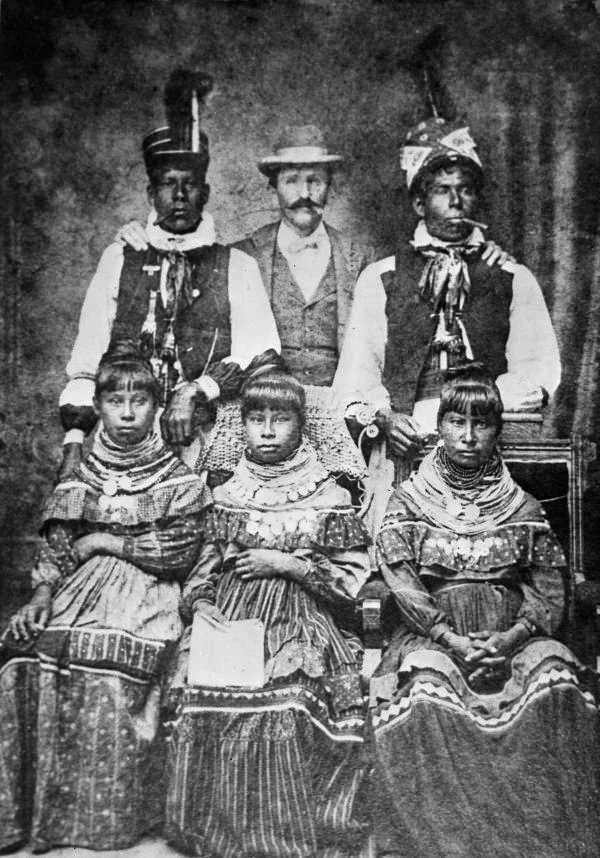
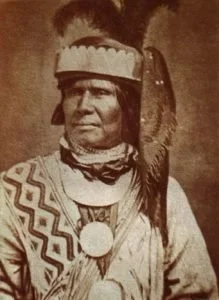
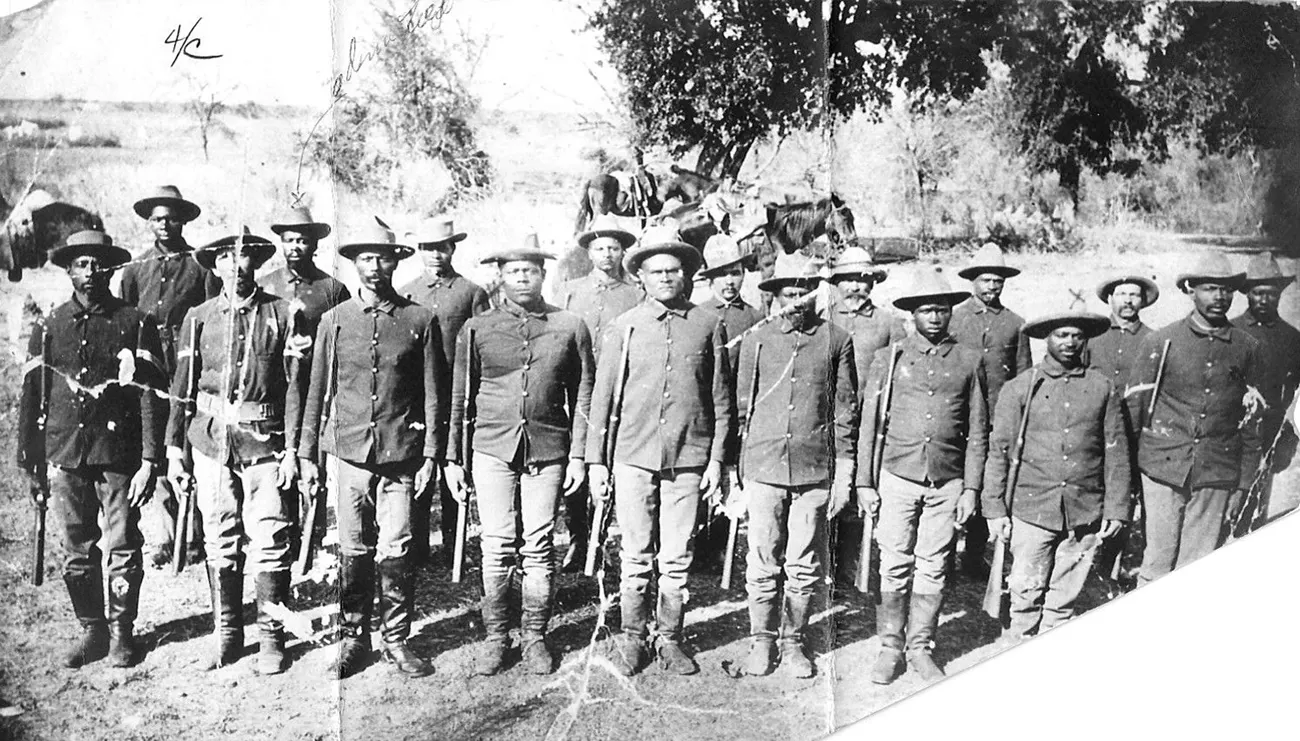
The Seminoles, meaning “seceders,” were a group of Creeks who escaped to Florida and intermarried with an offshoot of Gullahs migrating south from the Carolinas and Georgia in search of freedom.[6] The former Creeks would ally with the Spanish in resisting English forces seeking to dominate Florida, migrating down from eastern Alabama and Southern Georgia since the 1700s. Due to Spanish Catholicism, fugitives and maroons were granted freedom through The Siete Partidas, a code of thirteenth-century law prepared by King Alfonso X. It held that slavery was an unnatural condition under God. The code established ways in which the enslaved could become free and maintain protection of slave marriage and family under Catholic conversion. These newfound Spanish freedoms would inspire the fugitives of Carolina to seek refuge in Florida, creating a creole culture.[7] Together, this group would be known as the Black Seminoles, who, for fifty years, lived free of the violence of the antebellum South.
Spanish missionaries would build a fort on the edge of Biscayne Bay and Miami River in 1743, populating its edge with housing and farms. Florida would garner a reputation as a haven for freed slaves and maroons through Spanish land grants, rumors of lost treasure, and limited offers of freedom would draw in Bahamians along the Miami River. Seminoles and Black fugitives would also join forces to resist slave wranglers from West Oklahoma, aiming to re- enslave freed people. Some Seminoles, in cooperation with the British, were gifted Black slaves. Finding the whole concept alien, Seminoles treated their slaves as additional labor as part of their community by giving them tools and materials to build their own houses, corn to raise, and asking them to produce no more than ten bushels of corn for their keep. This ownership and solidarity would yield a creole culture. This group became the Black Seminoles. Indigenous people were often remarked as marginal, leading lives unconcerned with the dictates of Great Britain, Spain, or French colonial rule. Through miscegenation, they would embrace more freedoms, upending racial and sexual myths. In many ways, Black Seminoles were marginal, through their queerness, miscegenation, and protection of Blacks. Their refusal to participate under European respectability dictates or “Enlightenment” was deemed demonic.
Categorization of Man
Giddings establishes the centrality of human categorization[8] to the capture of the Black Seminoles.[9] He runs through a corollary of terms that were used to distance or secure each person’s humanity. The nineteenth-century writings reveal how imperative ethnoclass categorization was for securing the slave class and its endurance. The term “negroes” was regarded as an imputation of guilt by slaveholders. “Outlaw” described someone who fled from bondage and swore allegiance to another government. Legislative terms like negroes, outlaws, exiles, runaways, and pirates emerge as a means of establishing colonial difference between a human and demonized status; these terms imply the threat of geographic knowledge, where freedom can be obtained by moving towards globalization’s outposts.
“He charged them with no crime, imputed to them no hostile acts. He was conscious that they had taken possession of the fort solely for their own protection; but he styled them negroes, which in the language of the day among slaveholders, was regarded as an imputation of guilt.”
The critical argument that the state suggests through this language is that human class can be signified upon. The fungible movement of enslaved to liberated is readily legible in the final moments of the Second Seminole War, with General Taylor’s anxiety entering the Everglades’ swamp where settler colonial entitlement is disrupted by the Indigenous people’s clear assertion of belonging and heritage. Many of the same political tactics are deployed in the creation of military bases and prisons at the porous gates, as a means of controlling movement.[10] Today, those same terms of control reverberate in the literal materialization of the Krome Avenue detention centers in the Everglades, where immigrants are held captive, their political and spiritual contributions rendered illegible within the State.
Interconnected Political Geographies: Detaining Progress
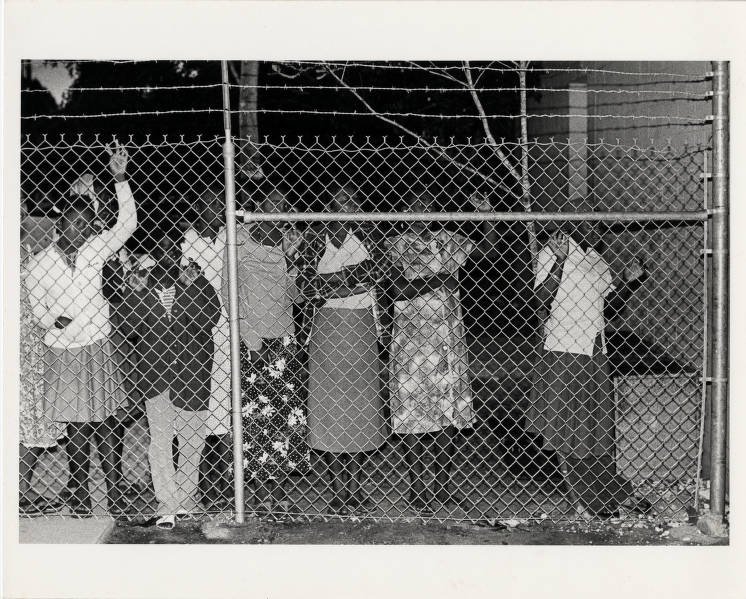
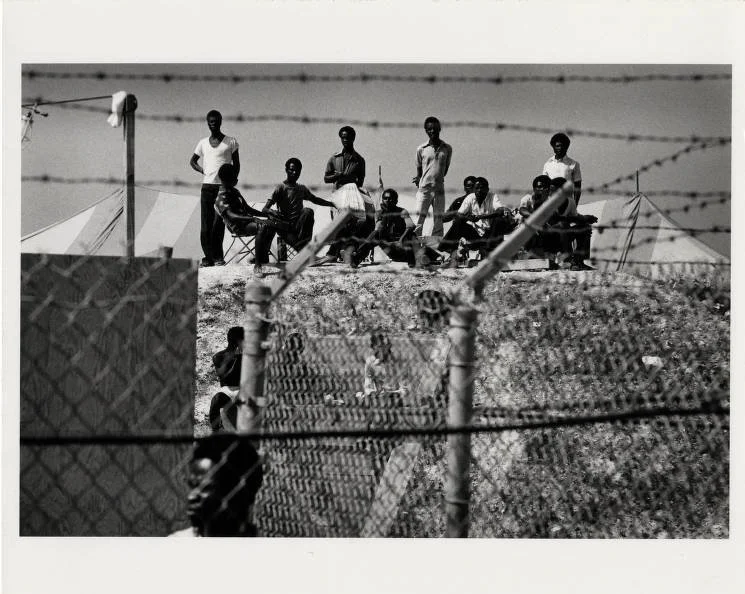
The arresting photographic archives of Michael Carlebach, a professor at the University of Miami, document Haitian refugees in 35 mm black and white images at the Krome Avenue Detention Center in 1982. The somber images evoke contemporary, familiar themes of political monitoring, unfettered movement, and dashed aspirations of maroon people in search of the American dream in pursuit of experimental modes of freedom. The Krome Avenue Detention Center, located on the edge of the Florida Everglades in Miami, FL, was built in 1965, three years after the Cuban Missile Crisis. The Detention Center rests on a former Nike missile base, owned and operated by the U.S. Immigration and Customs Enforcement.[11] It was reopened in 1982 as a detention center, monitoring the mass movement of dispossessed Cuban and Haitian people seeking refuge in the 1980 Mariel Boatlift, under the respective Castro and Duvalier regimes. The Detention Center is set back from the intersection of Tamiami Trail and the west side of Krome Avenue, veiled behind a thicket of trees. The architect is unlisted.[12]
It has a dedicated special management housing unit with 25 double-occupancy cells, a 30-bed behavioral health unit, and a 20-bed medical unit for patient treatment.
The Center underwent renovations in 1998, 2007, and 2019. The Detention Center is meant to be segregated by gender, to hold exclusively male detainees, following the daily threat and documentation of rampant sexual violence against its female residents in the 1980s, though it reportedly holds approximately 3,000 men and 40 women detainees as of March 2025.[13] The building’s max capacity is 510.
These photos of maroon bodies behind barbed wire, in cinder block rooms reminiscent of a military barracks, with advertisements to join the army pasted on the walls, present the material architecture of dehumanization, the suggestion of stagnation, and the irrational notion that prisoners are not to participate or locate themselves within a progressing, socially conscious world.[14] As racial capitalism and exploitation of natural and human life shape our current relationship to the earth and its ecological state, Black and Indigenous communities have raised decolonization and abolition as solutions to our climate crisis. These intertwined notions of human categorization link our present catastrophes of epistemology and citizenship to the environment and geography.
[1] Morrison, Toni. 2019. The Foreigner’s Home. The Source of Self- Regard: Selected Essays, Speeches and Meditations. Pg. 12.
[2] Giddings, Joshua R. The Exiles of Florida: The Crimes Committed By Our Government Against the Maroons Who Fled From South Carolina and Other Slave States. Pg. 37.
[3] Giddings, Joshua R. The Exiles of Florida: The Crimes Committed By Our Government Against the Maroons Who Fled From South Carolina and Other Slave States. Pg. 172- 174.
[4] Lethabo, Tiffany King. 2019. The Black Shoals. Duke University Press. Pg. 9.
[5] Gilmore, Ruth Wilmore. 2022. “Race and Globalization”. Abolition Geography: Essays Toward Liberation. Verso. Pg. 107.
[6] Giddings, Joshua R. 1835. The Exiles of Florida: The Crimes Committed By Our Government Against the Maroons Who Fled From South Carolina and Other Slave States. Black Classic Press.
[7] Hasall, Paul. 1997. Medieval Sourcebook: Las Siete Partidas: Laws on Jews, 1265. Fordham University. https://sourcebooks.fordham.edu/source/jews-sietepart.asp
[8] Wynter, Sylvia. "Unsettling the Coloniality of Being/Power/Truth/Freedom: Towards the Human, After Man, Its Overrepresentation--An Argument." CR: The New Centennial Review 3, no. 3 (2003): 257-337. https://dx.doi.org/10.1353/ncr.2004.0015.
[9] Giddings, Joshua R. The Exiles of Florida: The Crimes Committed By Our Government Against the Maroons Who Fled From South Carolina and Other Slave States.
[10] Morrison, Toni. 2019. The Foreigner’s Home. The Source of Self- Regard: Selected Essays, Speeches and Meditations. Alfred A. Knopf. Pg. 12.
[11] Nakamoto Group Inc. 2021. “Technical Assessement Review of the Krome North Service Processessing Center. U.S. Immigration and Customs Enforcement”. https://www.ice.gov/doclib/facilityInspections/KromeSPC_CL_05-13-2021.pdf
[12] Serving Immigrants. 2024. Krome Detention Center: Key Facts and Information. Serving Immigrants. https://www.servingimmigrants.com/krome-detention-center-key-facts-and-information/
[13] Geisel, Hunter; Carrero, Nikiya. 2025. “Detainees seen signaling SOS at Krome Detention Center”. CBS News. https://www.cbsnews.com/miami/news/krome-detention-center-sos-immigration-miami-dade/
[14] Davis, Angela. 1971. “Lessons from Attica to Soledad.” The New York Times. https://archive.nytimes.com/www.nytimes.com/books/98/03/08/home/davis-lessons.html